Curriculum
Table of Contents
The Bachelor of Humanities is a Great Books curriculum that includes a sequence of four Core Courses and a slate of Complementary Courses. These courses move from ancient Mesopotamia, India, and China, to modern America and they move from Religion, to Philosophy, to Literature, to Political Theory. ‘Great Books’ indicates that students read the original texts, rather than excerpts contained in textbooks.
The Humanities program offers five different Degree Streams. Within the Bachelor of Humanities, there are the Honours, Combined Honours, and Study Year Abroad streams, and a specialized stream in Humanities and Biology. The fifth stream is the specialized Journalism and Humanities degree.
Bachelor of Humanities Overview
Core Courses and Complementary Courses
| Year | Historical Period | Themes | Core Course |
| First | Pre-History to the Ancient World | Religion & Myth | HUMS 1000 鈥� Foundational Myths and Histories |
| Second | Antiquity to the Middle Ages | Philosophy & Theology | HUMS 2000 鈥� Reason & Revelation |
| Third | The Renaissance to Romanticism | Literature & Culture | HUMS 3000 鈥� Culture & Imagination |
| Fourth | The 19th Century to the Present | Politics & History | HUMS 4000 鈥� Politics, Modernity & The Common Good |
Each year students take a core course taught by two Humanities professors, which includes lectures and small discussion groups of 15-20 students, run by one of the professors. In addition to the Core Courses, each year includes a carefully integrated set of courses that complement the Core Courses.
The Humanities courses as a whole introduce students to some of the most exciting, interesting, terrifying, and important ideas ever articulated. The books have been chosen because each individually excites the intellect and stirs the imagination. But together, they tell a story about what it means to be human, and shed light on the fundamental assumptions that we in the 21st-century in the West have inherited.
For detailed information on all the courses listed below, visit the Current Course Outlines听辫补驳别.

First Year 鈥� Pre-History to the Ancient World
Core Course 鈥� HUMS 1000: Foundational Myths and Histories
“Foundational Myths and Histories” presents myths and symbolic histories through texts which embody the religious consciousness of humanity. Our earliest and perennial mode of explaining the universe is to tell ourselves stories about the origin and shape of all things. You will read a great part of the Hebrew Bible (Old Testament), as well as ancient Near-Eastern, Hindu, Buddhist, Daoist, and Confucian texts, and some sacred stories of the First Peoples indigenous to this land. You will discuss the themes of mortality, morality, cosmogony, sacrifice, and sacred and profane love.
| Tao Te Ching | The Iliad and the Odyssey | Medea |
|---|---|---|
 |  |  |
-
- Enuma Elish
- The Epic of Gilgamesh
- The Hebrew Bible (sections vary from year to year)
- Rig Veda
- Upanishads
- Bhagavad Gita
- Krishna Bhakti
- Gita Govinda
- Buddhacarita (Life of the Buddha)
- Confucius, The Analects
- Tao Te Ching
- Sacred Legends of the Sandy Lake Cree
- The Seven Fires Prophecy
Complementary Course 鈥� HUMS 1200: Humanities and Classical Civilisation
The three great Greek and Roman epics: Homer鈥檚 Iliad and Odyssey, and Virgil鈥檚 Aeneid, as well as a selection of literary and historical works from Greece and Rome. This course also includes detailed instructions on how to write a university-level paper.
Complementary Course 鈥� HUMS 1300: Classical Literature and Its Reception
The study of different types of ancient literature and the reception of Classical works in later periods. A focus on writing a research essay.
Complementary Course 鈥� RELI 1731: Varieties of Religious Experience
The nature of religious experience and the ways in which such experiences are interpreted, including Shamanism and Mysticism.
Second Year 鈥� Antiquity to the Middle Ages
Core Course 鈥� HUMS 2000: Reason and Revelation
“Reason and Revelation” presents the origin of Greek Philosophy and its adoption into Medieval Christian Theology. It has often been said that the foundations of Western culture are Athens and Jerusalem. In the period from 500 B.C.E. to 1300 C.E. a new consciousness develops, confident in the power of human reason to go beyond mere storytelling. The universe is conceived of as following a rational order, open to human understanding. This new conception is embodied not only in political institutions such as Greek democracy, but in the confidence of Medieval Christian, Islamic and Jewish thinkers that their revealed religious texts can and must be interpreted through the power of human reason. Moreover, what reason tells us is that the order of things is good, because it was made by a good God.
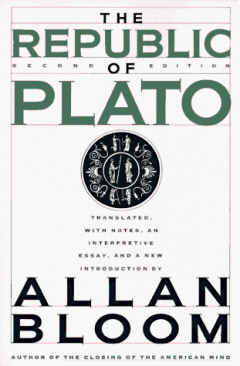
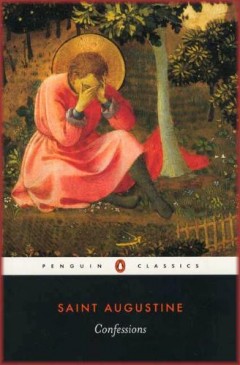
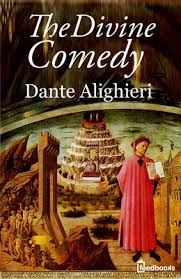
| The Republic | Confessions | The Divine Comedy |
|---|---|---|
 |  |  |
-
- Plato, Apology
- Plato, Meno
- Plato, Republic
- Aristotle, Categories
- Aristotle, Physics
- Aristotle, Metaphysics
- Aristotle, Ethics
- Cicero, On Moral Ends
- Cicero, On the Good Life
- Plotinus, Enneads
- St. Augustine, Confessions
- Boethius, The Consolation of Philosophy
- Ibn Tufayl, Hayy Ibn Yaqzan
- Maimonides, Guide of the Perplexed
- Thomas Aquinas, Summa Theologiae
- Marguerite Porete, The Mirror of Simple Souls
- Dante, The Divine Comedy
Complementary Course 鈥� RELI 2710: Maccabees to Muhammad
The early literature and history of the three great Abrahamic traditions, Judaism, Christianity, and Islam. In particular key aspects of the social, literary, cultural, and intellectual development of these three interrelated traditions from approximately the Destruction of the Second Temple (1st cent. C.E.) to the Crusades (11th cent. C.E.).
Complementary Course 鈥� HUMS 2101 & 2102: Art from Antiquity to the Medieval World; Modern European Art
A survey of Western art and architecture from Antiquity to the contemporary world.

Third Year 鈥� The Renaissance to Romanticism
Core Course 鈥� HUMS 3000: Culture and Imagination
“Culture and Imagination” presents the great upheavals of the Modern period. The Renaissance, the Protestant Reformation, early colonialism, the rise of print culture, the emergence of early capitalism and slavery, and the Romantic reaction to it, all transformed Europe in ways hardly imaginable to our Medieval forebears. In this year, students will look especially at literary works which reflect these upheavals. The invention of the printing press created a new class of educated citizens, who took part in public debates in ways not possible earlier. The third year ends where the fourth year begins, with the two great Enlightenment revolutions, in America and in France.
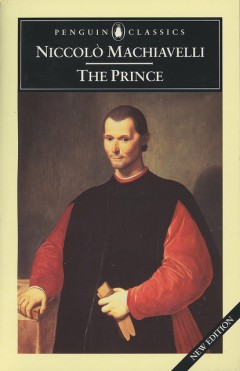
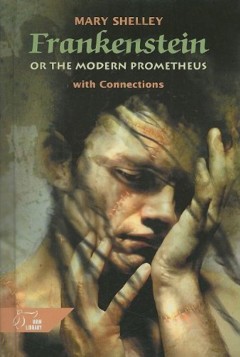
| Hamlet | The Prince | Frankenstein |
|---|---|---|
 |  |  |
-
- Petrarch, The Canzoniere
- Machiavelli, The Prince
- Erasmus, The Education of a Christian Prince
- Martin Luther, Freedom of a Christian
- John Donne, Songs and Sonnets
- Shakespeare, Julius Caesar
- Shakespeare, The Tempest
- Benjamin Franklin, The Autobiography
- Adam Smith, The Wealth of Nations
- Rousseau, Politics and the Arts: Letter to M. D鈥橝lembert on the Theatre
- Goethe, The Sorrows of Young Werther
- Mary Shelley, Frankenstein
- The American Declaration of Independence & the Federalist Papers #10
Complementary Course 鈥� HUMS 3200: European Literature
Major movements and works from Dante鈥檚 Divine Comedy through Voltaire鈥檚 Candide. Themes include the New Humanism versus old Chivalry in the Renaissance and Baroque periods; the rise of the modern novel and drama; reason, nature, and the Enlightenment project.
Complementary Course 鈥� HUMS 3102 & 3103: Western Music 1000-1850; Western Music 1850-2000
A survey of the major musical genres and styles in Western music from medieval times to the 21st century.
Fourth Year 鈥� The 19th Century to the Present
Core Course 鈥� HUMS 4000: Politics, Modernity, and the Common Good
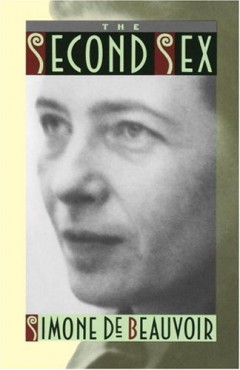
鈥淧olitics, Modernity and the Common Good鈥� begins with the revolutionary philosophical and political movements of the late 18th century that ended the dominance of an overarching meaning and a divine-centered order. Half of the course concentrates on the modern thinkers鈥� attempts to re-envision the West in light of this revolutionary change. For example, Hegel proposed a return to the well-springs of historical tradition, religious faith and classical thought and Marx ushered in a futuristic utopia of collective bliss. It also presents, with Nietzsche and Heidegger, the abandoning of the Greek confidence that human reason shows us a universe ordered towards the good. The other half of the course presents a portrait of the civilization that grew from this human-based order and meaning. Arendt, Taylor, and Bull define this order as an autonomous, dis-embedded, and transformed condition, while Gandhi, Said and Foucault examine its disoriented order.
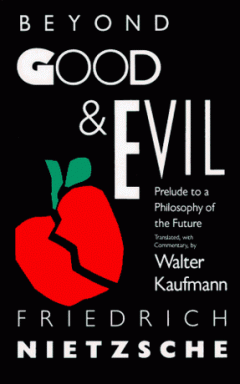
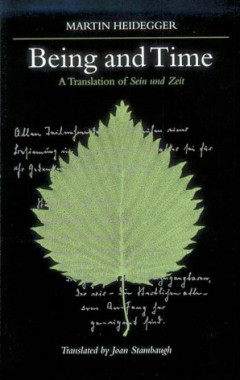
| Beyond Good and Evil | Being and Time | The Second Sex |
|---|---|---|
 |  |  |
-
- Burke, Reflections on the Revolution in France
- Kant, Groundwork for the Metaphysics of Morals
- Kant, Prolegomena to any Future Metaphysics
- Mill, On Liberty
- Hegel, The Philosophy of History
- Hegel, The Phenomenology of Spirit
- Marx, The German Ideology
- Marx, The Critique of Hegel鈥檚 Philosophy of Right
- Marx, The Communist Manifesto
- Baudelaire, The Painter of Modern Life
- Kierkegaard, Fear and Trembling
- Nietzsche, The Birth of Tragedy
- Nietzsche, The Advantages and Disadvantages of History for Life
- Nietzsche, Beyond Good and Evil
- Freud, Civilization and its Discontents
- Freud, An Outline of Psychoanalysis
- Heidegger, The Origin of the Work of Art
- Heidegger, What is Metaphysics?
- Heidegger, An Essay Concerning Technology
- Sartre, Existentialism is a Humanism
- Hannah Arendt, The Human Condition
- Hedley Bull, The Anarchical Society
- Foucault, Discipline and Punish
- Gandhi, Hind Swaraj
- Edward Said, Orientalism
- Salman Rushdie, Midnight鈥檚 Children: a Novel
- Charles Taylor, Modern Social Imaginaries
Complementary Course 鈥� HUMS 4103: Science in the Modern World
An introduction to the major scientific ideas of our time, such as Big Bang theory, molecular genetics, evolution, and atomic structure, as well as the impact of technology on society in areas such as global warming, pollution, genetically modified foods, and viral infections.
Complementary Course 鈥� HUMS 4500: Modern Intellectual History
The intellectual history of the Canadian and American Foundings with a special emphasis on the role of political theory.
Complementary Course 鈥� HUMS 4901-4904 Humanities Research Seminars
In their final year, Bachelor of Humanities students hone their research skills by taking one or two special fourth-year Research Seminars, whose topics change each year. Past Research Seminar topics include:
- 厂辫颈苍辞锄补鈥檚 Ethics
- Tudor Queens: Sex, Power and Writing in the Lives of Katherine Parr, Elizabeth I, and Mary Queen of Scots
- The Philosophy of Avicenna
- The History of Satan
- Plato鈥檚 Later Dialogues: Theaetetus, Parmenides, Sophist, Statesman
- Utopian USA: A Survey of the Utopian Impulse Within American Culture
- Mahatma Gandhi Across Cultures
- The Intellectual Origins of Liberal Capitalism
- Justice and the Public Good in the Literature of Renaissance England
- Aristotle’s Metaphysics
For a complete list of past Research Seminar topics, visit our Archived Course Outlines page.
Summary
The four years of the program are designed as an integrated whole, each year building on what has been learned before. Having uncovered the origins as well as the critiques of the human condition, students arrive back in our own contemporary world with a keener sense of the stakes that face us when we make our own informed choices as citizens. In this way, the program aims to foster the intellectual, ethical and aesthetic development of its students.
Degree Streams
The College of the Humanities offers four different streams within the Bachelor of Humanities degree. Each of these streams offers unique elements that allow you to customize your education to suit your interests.
In addition, the College offers jointly with the School of Journalism a Bachelor of Journalism and Humanities degree.
The charts given below are intended to give a general sense of the various streams to prospective students. For the detailed and authoritative versions of these charts, see the Degree Progression Charts page, and the Undergraduate Calendar entries for the and .
The Bachelor of Humanities Honours
The Bachelor of Humanities Honours stream is the standard version of the degree. It includes the highest number of free electives, for students with the broadest interests beyond their Humanities studies.
| Year One | Year Two | Year Three | Year Four |
| Core 鈥� Foundational Myths and Histories | Core 鈥� Reason and Revelation | Core 鈥� Culture and Imagination | Core 鈥� Politics, Modernity & the Common Good |
| Greek & Roman Literature | Origins of Judaism, Christianity, & Islam | European Literature | Modern Intellectual History & Modern Science |
| Religious Practice | History of Art | History of Music | Two Research Seminars |
| Language Requirement | Free elective course | Free elective course | Upper-year elective course |
| Free elective course | Free elective course | Free elective course | Free elective course |
The Bachelor of Humanities with a Combined Honours or a Minor
The Bachelor of Humanities with a Combined Honours or a Minor stream includes the same Humanities requirements as the Honours stream. However, in place of free electives, students have room to complete a degree in a specialized subject such as English or History, in addition to their Humanities Great Books study.
Students are free to combine Humanities with at 杏吧原创 that offers a Combined Honours or a Minor. A Combined Honours subject usually requires the equivalent of six or seven full-year (1.0 credit) courses, while a Minor normally requires the equivalent of four 1.0 credit courses.
| Year One | Year Two | Year Three | Year Four |
| Core 鈥� Foundational Myths and Histories | Core 鈥� Reason and Revelation | Core 鈥� Culture and Imagination | Core 鈥� Politics, Modernity, & the Common Good |
| Greek & Roman Literature | Origins of Judaism, Christianity, & Islam | European Literature | Modern Intellectual History & Modern Science |
| Religious Practice | History of Art | History of Music | Two Research Seminars |
| Language Requirement | Second Honours or Minor subject | Second Honours or Minor subject | Second Honours or Minor subject |
| Free elective course | Second Honours or Minor subject | Second Honours or Minor subject | Second Honours or Minor subject |
The Bachelor of Humanities with a Study Year Abroad
The Bachelor of Humanities with a Study Year Abroad provides slightly more room in their degree for Humanities students who wish to earn credits while doing a third year abroad. Students doing the Honours or Combined Honours/Minor streams may also study abroad.
| Year One | Year Two | Year Three | Year Four |
| Core 鈥� Foundational Myths and Histories | Core 鈥� Reason and Revelation | Course abroad | Core 鈥� Culture and Imagination |
| Greek & Roman Literature | Origins of Judaism, Christianity, & Islam | Course abroad | European Literature |
| Religious Practice | History of Art | Course abroad | History of Music |
| Language Requirement | Free elective course | Course abroad | Core 鈥� Politics, Modernity, & the Common Good |
| Free elective course | Free elective course | Course abroad | Modern Intellectual History & Modern Science |
The Bachelor of Humanities and Biology
The Bachelor of Humanities and Biology degree is designed for students who intend to apply to Medical School. However, it is also worthwhile for students with a general interest in Science, an addition to their interest in Humanities.
| Year One | Year Two | Year Three | Year Four |
| Core 鈥� Foundational Myths and Histories | Core 鈥� Reason and Revelation | Core 鈥� Culture and Imagination | Core 鈥� Politics, Modernity & the Common Good |
| Greek & Roman Literature | Origins of Judaism, Christianity, & Islam | European Literature | One Research Seminar |
| Religious Practice | Biochemistry & Genetics | History of Art or History of Music | Advanced Biology or Biochemistry |
| Introductory Biology | Microbiology or Ecology, & Plant or Animal Biology | Organic Chemistry | Advanced Biology or Biochemistry |
| Introductory Chemistry | Upper-year elective course | Upper-year elective course | Advanced Biology or Biochemistry |
For more information, see the Bachelor of Humanities and Biology page.
The Bachelor of Journalism and Humanities
The Bachelor of Journalism and Humanities degree is designed for students who wish to combine their study of the Great Books with a professional career training.
| Year One | Year Two | Year Three | Year Four |
| Core 鈥� Foundational Myths and Histories | Core 鈥� Reason and Revelation | Core 鈥� Culture and Imagination | Core 鈥� Politics, Modernity & the Common Good |
| Greek & Roman Literature | Origins of Judaism, Christianity, & Islam | European Literature, and History of Art or History of Music | Modern Intellectual History or Modern Science |
| Elective | Religious Practice | Video and Audio Journalism | Research Seminar and Journalism Seminar |
| Foundations of Journalism | Fundamentals of Reporting | Digital Journalism, and Reporting in Depth | Advanced Journalism Course |
| Canadian History and Indigenous Studies | Digital Journalism, and Media Law | Media Ethics | Advanced Journalism Course |
For more information, see the Bachelor of Journalism and Humanities page.