
Research in the Social Diversity Lab addresses聽the emotional, social, and behavioural implications of belonging to marginalized and/or stigmatized groups. In particular, we are concerned with how these factors undermine health and wellness, including an assessment of the biological mechanisms. We also look to understand the strengths and resources groups provide that can protect the health of group members. Our research addresses these issues from four perspectives, including:
1. Embracing a social identity (Intergroup Processes)

Civil rights demonstration
Members of groups that are marginalized聽by the rest of society are the target of prejudice and discrimination that can have severe consequences on health. 聽But these groups can also聽be the most vocal in expressing their pride (e.g., gay pride), and this can serve a protective function. 聽We have conducted research looking聽at聽how members of religious groups, women, Indigenous Peoples, refugees,聽and individuals who have been diagnosed with mental illness deal with stigma and discrimination, and the implications for biological and psychosocial stress reactions that contribute to health and illness.
2. Overcoming differences in opinion (Intragroup Processes)
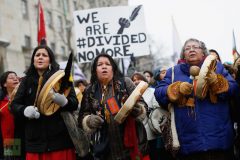 Groups often comprise a diverse constituency. For example, women come from聽different ethnic groups, religions, sexual orientations, and political ideologies. How then does a group come to view itself as a group, and achieve solidarity to take action? Resolution of these differences is important to being able to build a sense of community that serves as聽an effective resilience factor, and for changing the status quo. In our research, we 聽try to understand how group members聽overcome their differences to build a common vision and healthy community.
3. Looking for support (Interpersonal Processes)
 Support from others who share our聽experiences may be important to our well-being. Indeed, members of socially marginalized聽groups often seek segregated contexts that allow them to support one another and to treat each other as individuals. These support groups may form the first step in coming to feel good about belonging to a stigmatized group, despite what the rest of society thinks. Alternatively, these groups may also serve to isolate members from others. We are conducting research聽to look at the role of social support on resilience to the negative mental and physical health effects of various stressors.
4. Coping with life’s stressors (Intrapersonal Processes)
 An inability to deal with traumatic and day-to-day stressors may be a contributing factor to depression and other stress-related illnesses. Our research looks at coping mechanisms to deal with life events, including women’s responses to abuse from intimate partners, implications of childhood trauma such as early maltreatment on adult health and well-being, and coping with discrimination among members of stigmatized groups. We are interested in various stress-related outcomes, including depression, posttraumatic stress disorder, and physiological stress functioning (e.g., HPA functioning).
Unhappy girl image courtesy of David Castillo Dominici at聽