鈥擳he following story was written by Taia Goguen-Garner and published by the Faculty of Graduate and Postdoctoral Affairs. Pansee Abou Elatta is also completing the Curatorial Studies Graduate Diploma.
 Museums are full of cultural artifacts. These artifacts are often circulated, displayed, and seen throughout the world. The reality of this is that some of these artifacts were stolen from their homelands.
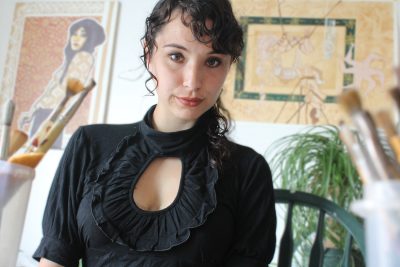
PhD student, Pansee Abou Elatta in聽Cultural Mediations聽is researching the history of the decolonial struggle to return stolen cultural artifacts to their nations of origin.
鈥淚鈥檓 especially interested in how our understanding of incredibly iconic Ancient Egyptian artifacts 鈥� like the Bust of Nefertiti, the Rosetta Stone, and the Paris Obelisk 鈥� has been defined through these very public protest campaigns as part of broader anti-colonial efforts,鈥� explained Abou Elatta.
Abou Elatta鈥檚 interest in this research piqued when moving from Egypt to Canada. She realized that museums were often the only place where others could learn about her nation of origin.
鈥淪eeing the stereotypical way that Egypt was often represented made me skeptical of the way we invest cultural institutions with the authority to tell a single version of history that鈥檚 treated as absolute truth,鈥� shared Abou Elatta. 鈥淭his project was an effort to write some of the histories that haven鈥檛 been as well-represented, but that have impacted our culture to an enormous extent.鈥�
Her research is working towards writing聽modern histories聽of artifacts that almost everyone is familiar with. This refers to how these artifacts became a part of European collections, how they鈥檝e gained popularity and how their meaning has been contested.
鈥淭he story we鈥檙e familiar with stars European archaeologists and Egyptologists, but a huge part of the untold story is one of communities working together to write their own nation鈥檚 history in the face of colonial oppression,鈥� said Abou Elatta.
The graduate student is conducting this research by looking at historical media coverage of repatriation campaigns. She is focusing on the way protestors presented a competing view of their nation鈥檚 history and how the Western public responded. She is also looking at how museums themselves positioned their claims to these artifacts in response to protests.
She highlights that, in recent years, museums have become a lot more interested in the question of decolonization. Although the discussion is often framed as a recent realization of museum professionals rather than the global project that has been led by colonized peoples for centuries.
鈥淏y drawing attention to this underrepresented history, I hope the terms of the discussion on museum decolonization can be shifted to emphasize those most impacted by it.鈥�
Abou Elatta鈥檚 experience as an Egyptian-Canadian artist, curator and activist goes hand-in-hand with her research.
鈥淚 see the ways that activist histories are erased from popular memory on a daily basis, and the ways that social movements constantly need to re-invent the wheel as a result,鈥� stated Abou Elatta. 鈥淢y art practice is a way for me to envision new possibilities, new futures that are unbound by these histories of violence and oppression as a way of reminding others and myself who share similar experiences of what we鈥檙e working towards.鈥�
Dr. Monica Patterson,聽an Assistant Professor in the聽Institute of Interdisciplinary Studies, the Assistant Director of the聽Institute for Comparative Studies in Literature Art and Culture聽and Director of聽聽along with聽Dr. Ming Tiampo, Professor of聽Art History,聽have been supervising Abou Elatta throughout her research.
鈥淏oth two incredible scholars with a wealth of experience on museums, representation, culture, and colonialism,鈥� emphasized Abou Elatta. 鈥淭hey鈥檝e helped me find my focus in this project, and encouraged me to do the work I鈥檓 most inspired by. I鈥檓 incredibly grateful for their support!鈥�
Professor Carolyn Ramzy, and聽Professor Karim Karim聽are Abou Elatta鈥檚 committee members as their expertise on Egypt and media representations of Muslims (respectively) has been important in developing her research.
Abou Elatta hopes to continue producing research that works in the service of decolonization, creating space for underrepresented histories and imagining liberatory futures.
You can find out more about the PhD in Cultural Mediations by聽.