by Amy Richardson, CFICE Communications RA
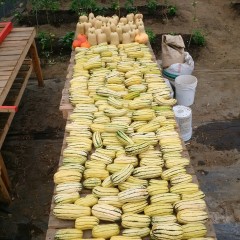
A large table of fresh squash from Emma’s Acres. 漏 L.I.N.C. Society
The community of Mission, B.C. came together to vote for L.I.N.C. to win much deserved grants.
In early December, within days of each other, Sherry Edmunds-Flett, Executive Director of, was notified that her cause had won $77,000 in grant money. L.I.N.C. received two sums of money: $45,000 from the for the category of Community Resilience, where the public can vote for the cause they think is the most deserving; and $32,000 from the , a fund dedicated to helping food security causes.
鈥淚t was really cool the way the whole community voted for us,鈥� Edmunds-Flett says, recalling the emotion she felt when she received the news. 鈥淚t was a feeling of gratitude because people didn鈥檛 need to give us money and they chose to give us money. That felt really good.鈥�
L.I.N.C. (Long-term Inmates Now in the Community) is a non-profit charity that works to develop positive understanding and dialogue between prison institutions, long-term offenders and the community
L.I.N.C. is the first and only awareness group of its kind run by ex-offenders in Canada. It was founded by Glen Flett, Sherry鈥檚 husband. The couple married 28.5 years ago while Glen was serving a life sentence in prison. Together at L.I.N.C. they hold community events, support groups and run an agricultural social enterprise, called , that employs victims, survivors, offenders and ex-offenders.
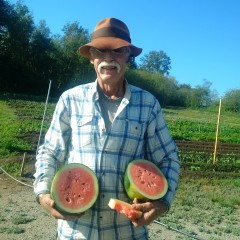
Glenn Flett of LINC, holds a ripe watermelon cut in half at Emma’s Acres. 漏 L.I.N.C. Society
Emma鈥檚 Acres produces vegetables, herbs and fruit grown naturally on an eight-acre property leased to them by the District of Mission.
Edmunds-Flett says they plan on putting the money towards their sustainability plan for Emma鈥檚 Acres.
鈥淲e figure we will be self-sustaining in two years, not this summer but next summer. So the money will allow us to do needed improvements to the infrastructure and buildings there.鈥�
They will be working on increasing the pH level in the soil, and bringing compost, electricity and a water harvesting system to the site so they can ramp up production.
They鈥檙e also going to start growing medicine for the elders in the community.
鈥淲hat we want is to grow the medicine for the elders then have the elders come teach us,鈥� she says. 鈥淧eople, especially youth, from the community will be able to learn about cultural teachings from the elders and about how to use the medicines, what they鈥檙e used for and everything in between. The project would be sustainable by selling the medicine.鈥�
L.I.N.C. is well known in the community, so it鈥檚 no surprise they won the Community Resilience category for the Aviva Community Fund.
鈥淧eople know who we are. We don鈥檛 hide that Glen was in jail and we tell our people that they don鈥檛 need to hide either. Any project or anything we鈥檙e involved in, people know ex-offenders and offenders are involved and are doing the work. It鈥檚 not a hidden thing. Our community knows. They dig it. They love it,鈥� she says.
L.I.N.C. also gives back to community members impacted by murder. Any friend or family member of someone who鈥檚 been murdered is welcome to any produce or baked goods from Emma鈥檚 Acres for free.
鈥淚t鈥檚 a way of giving back. Community resilience to us is the ability to bounce back and feel empowered,鈥� she says. 鈥淥ur project allows people to be more than their worst action. They鈥檝e done horrible deeds but they鈥檝e been accountable for them and now they鈥檙e giving back to their community.鈥�
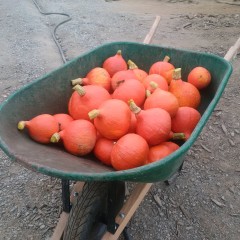
Freshly picked gourds. 漏 L.I.N.C. Society
Edmunds-Flett says CFICE helped L.I.N.C become recognized as a cause working for food and social justice issues. CFICE also helps her learn how to evaluate her project.
鈥淥ne of the things we want to do if our project scales up, which I’m hoping it does, we need to have a proper evaluation system. CFICE has taught me about that and gave me the space to explore broader contextual issues.鈥�