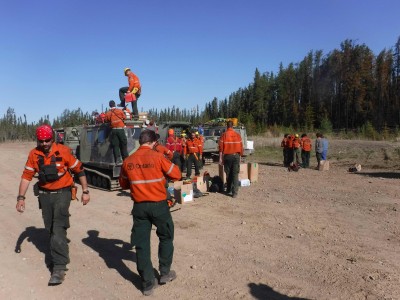
 There鈥檚 something a little extra delicious about a barbequed meal and a cold beer on the deck after returning home from a fire-fighting tour. Our crew just finished a 19-day tour in Lac la Biche district in Alberta. We were working on a fire near Cold Lake that grew to 10 000 ha in less than 4 days in the absence of wind鈥攊t was dry, and the fuels were ready to burn. Fire behavior predictions foreshadowed lots of work, long days, and short sleeps.
The Alberta government set up a base camp (trailers for a kitchen, diner, bathroom, logistics, radio ops, etc.), and we set up our tents. Everyday on tour is unpredictable鈥攚hat you鈥檒l see, what you鈥檒l accomplish, when you鈥檒l be going home. A small change in observed weather throughout the day can either increase or suppress fire behaviour, movement, and growth. Despite the abundant unknowns, I鈥檓 a creature of habit, and try to create as much of a daily routine as possible for the things I can control.
4:54 am: Alarm goes off.
5:15 am: Morning jog down the basecamp road
5:57 am: Wait in line for breakfast
5:59 am: Grab a bagged lunch
The bagged lunch. Of all the elements and difficulties you face on a daily basis while on tour, the bagged lunch can really be a morale booster or breaker. Looking in your bagged lunch before you get to the line can be destructive, because you KNOW there is going to be a white bread ham sandwich in there, and that鈥檚 a day-killer that you just don鈥檛 need at 6:00am (or if you鈥檙e 鈥渓ucky鈥�, it鈥檒l be a white bread peanut butter and butter sandwich). It鈥檚 not wet feet, bug bites, sleep deprivation, or diminished cigarettes that warrant daily complaints; it鈥檚 the white bread ham sandwiches.
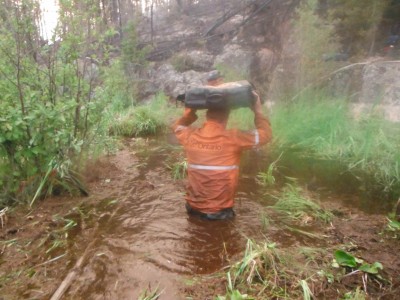 On average, the bagged lunch consists of: 3 white bread ham, cheese, and butter sandwiches; one apple; one orange; one dessert square; two juice boxes; and, if you choose to grab one, a bag of chips. It might be immature. It might be selfish. But when you have a daily 30-minute walk through knee-deep muskeg to get to a 20-minute hike through dusty, sooty, burn, and your face is covered in black ash, your B.O. is unrecognizable, and your shin chafe starts to bleed, the last thing you want to pull out of your bagged lunch is a white bread ham sandwich.
By day 8, you鈥檙e pretty vocal about how much you hate sandwiches. By day 10, you鈥檙e pretty sure you cannot eat another sandwich. By day 14 you鈥檝e boycotted sandwiches, and have started hoarding granola bars to get you through the day. Day 14. That鈥檚 two weeks.
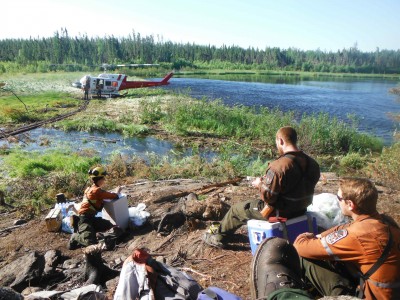 Let鈥檚 think about this for a minute. Ham, cheese, and butter sandwiches seem to be a fireline base-camp go to鈥攚hy? Because they鈥檙e cheap and easy to make. When there are over 300 people to feed by a staff of 10, you can鈥檛 expect anything much fancier. Now think about northern semi-remote districts in Ontario, like Armstrong, or Pickle Lake, and the price of supporting over 200 rangers, where food prices are already outrageous for locals. Should the Ministry be responsible for supporting gourmet meals for the duration of rangers鈥� stay?
Food is expensive. Food preparation is timely. Exciting meal planning and development requires knowledge. Despite education, it鈥檚 surprising how quickly we become bored of eating the same, affordable meals all the time, and how quickly we become drawn to grabbing that bag of chips, or trying to score an extra dessert square. Food quickly becomes a comforting item on fire, as it is for so many people outside of fire.
We know that obesity rates are high among First Nations people. We know that food prices in remote communities are ridiculous. And so we know that the price and practicality to eat healthy is affecting obesity rates. But an underrepresented factor is the availability of variety. While we know that, yes, variety is limited and affects some remote and semi-remote areas, each day that I had a white bread ham sandwich, I was reminded how quickly you become bored of plain food, and how important it is to seek variety in order to continue making healthy choices.
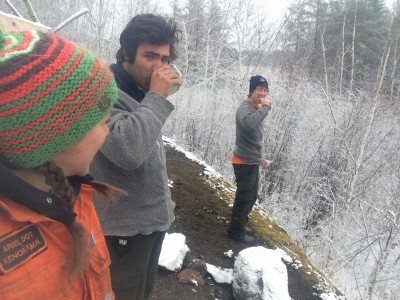 I am aware of the importance of fueling my body with healthy, hearty fuels, and so sometimes I have to remind myself to eat for the nutrients, not the comfort or enjoyment鈥攂ut what happens when people aren鈥檛 as aware of the importance in making healthy decisions regularly? What about those who aren鈥檛 aware that they are making unhealthy decisions? What about those who don鈥檛 know what a healthy decision is? Considering all these questions, why on earth would someone continue to eat the white bread ham sandwich when they can grab an extra bag of BBQ chips, a Pepsi, and a dark chocolate Mounds bar every day instead?
It鈥檚 important to realize that it鈥檚 not a divide; it鈥檚 not that First Nations people are always choosing unhealthy food options, and white people are saints when it comes to eating鈥攖rust me, I know that鈥檚 not true. But there鈥檚 a point to be made as we KNOW that food options are limited in northern remote and semi-remote communities, and that prices are high. If we want to truly make healthy options more available, it鈥檚 not enough to subsidize prices; it鈥檚 not enough to add more lettuce and peppers to the shelves. We need to revisit the importance of variety. Options. Explanations. Mentality. Being part of an individual鈥檚 built environment, improving overall diet is a complex task; not one that will ever have a simple answer or solution.
6:00am: Switch out 95% of my bagged lunch items with food I scavenged and stowed from dinner the night before.
6:03am: Get changed and gear up for the day
6:25am: Head to the bus, bagged lunch in hand, and get ready for another day鈥檚 work on LWF-122.
Author Ariel Root聽is currently in Kenora in her fourth season working as a forest fire fighter for the Ontario Ministry of Natural Resources and Forestry. 聽She has a BSc in Food Science & Nutrition from 杏吧原创 University in 2012, and is currently a graduate student in the Health Science, Technology and Policy program at 杏吧原创 University. She has been featured on APTN’s new hit TV show, Playing with Fire, Season 2.
Come back for next week’s instalment.
Photos by Ariel Root
Follow us on聽!