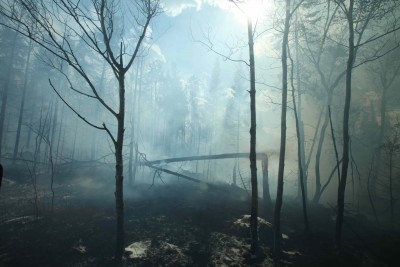
 Every forest is a little magical. Unique layout, diversity, and character鈥攏o two forests are ever the same. But when a fire rolls through the forest, it can swallow everything. Colours that once stood as brilliant greens or families of intertwined wood and fibers are all destroyed. All are charred. All become black. No matter the immense amount of diversity in the forest beforehand, the fire leaves a forest looking exactly the same鈥攂lack, broken, and destroyed. Sometimes air attack arrives at a fire after we鈥檝e started suppression, and so we pull back from the fire鈥檚 edge. When we return, it鈥檚 shocking to see what鈥檚 happened in those few absent moments鈥攚here there was forest, equipment, wild-living-things鈥攖here is now nothing. Just burnt. Sometimes it鈥檚 almost unrecognizable. That unique tree lost all its foliage. Or that rock now stands completely on its own. There aren鈥檛 many words to describe how it feels to see a burnt over area after the fire has calmed down, except truly amazing. It鈥檚 amazing how everything is gone, and all that remains is the solid, uniform, black. The forest loses all its character. It all looks the same. Few remains exist to remind you how diverse it used to be.
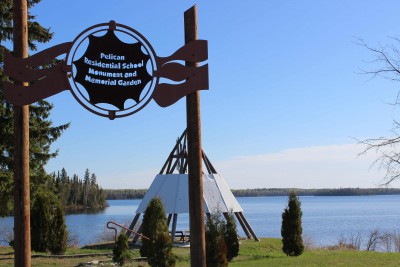 I remember driving through town in my first year with my crew when a public announcement was broadcasted on the radio. It was about Residential schools. 鈥淲hat鈥檚 this all about.鈥� I had no idea. My crewmember started to explain it to me. A partnership between the Canadian government and the churches supported the removal of First Nations children from their families to Residential schools. Children were taken from their homes. Boys鈥� hair was cut short. Their clothes were mainstreamed. They were banned from practicing their home language or cultural practices. The severity of physical or sexual abuse varied.
鈥淢y mom remembers being scolded for saying 鈥榥imaanendam鈥� when she didn鈥檛 understand what the teacher was asking her. But other people won鈥檛 talk about the schools at all.鈥�
The system strived to strip the unique culture from the children.
鈥淎nd they were successful鈥攖hink about all that knowledge and all those traditions that are gone… they can鈥檛 pass any of it down to us because they don鈥檛 know any of it anymore. So we lose it. It鈥檚 just鈥� gone.鈥�
We continued to drive downtown Kenora.
鈥淎nd so you always hear people look down on the homeless or drunk Indians in town, but can you blame them? If their parents were abused in school by supposed superiors, and developed a substance abuse problem, then had their own children, how can they be supportive and successful parents, when they struggle to take care of themselves?鈥�
There鈥檚 more to substance abuse than just the addiction to the feeling. It鈥檚 the coping. The conditioning. The necessity.
鈥淚 know a man that drove to Calgary for his settlement. He didn鈥檛 want anyone he knew to hear his case.鈥�
The Indian Residential School Settlement Agreement attempts to price reconciliation. How can you really price complete loss of knowledge or culture? What is the price of revisiting and refreshing the memories of such pain?
鈥淪ome people say that the memories are too painful to revisit in front of a courtroom of people鈥� the money isn鈥檛 worth the cost of reliving those memories.鈥�
 I鈥檝e only started to ask, learn and understand the repercussions and effects from such a shameful historical event, though it鈥檚 given me a greater appreciation for peoples鈥� inner warriors. Those warriors: persisting to fight for what they believe, whether it be traditional or adopted knowledge and practice. A friend of mine disallowed his son from cutting his hair, despite schoolmates mocking him for having 鈥済irls鈥� hair鈥攈is culture was to wear his black hair long. So my friend proudly grew his hair long again as well鈥攈e is supporting his culture. I met an elderly man at the Kenora library. I was always envious of his black fox fur, deerskin, beaded gloves he bought handmade from his community. He once told me to never go to a Pow Wow鈥攊nappropriate things happen there. Bad things, he said. He was a Christian. That was his culture.
 Culture is not an outlined set of specifications or requirements. It鈥檚 not a definition of certain songs, practices, or beliefs. A person鈥檚 culture is derived from a collection of experiences, choices, and goals, irrespective of skin colour, or born label. While parts of someone鈥檚 specific culture may be lost, or forgotten, culture is always being rewritten, fine-tuned, tweaked, and regrown. It鈥檚 amazing how people can be so broken down, yet the smallest flicker of light remaining from within can support and strengthen regrowth.
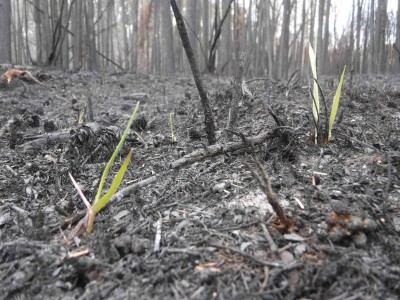
Regeneration of a forest after a fire can sometimes take years. It will never look exactly the same as it did originally, but the components are all there鈥攂rilliant green foliage, intertwined woods and fibers, unique layout. In fact, the growing season following a forest fire supports some new species, like morels and blueberries 鈥� new additions that strengthen the ecosystem. One thing that never fails to amaze me is how quickly regeneration begins after destruction. When you look hard enough, you鈥檒l spot it; green will poke through the charred, blackened earth only days after a fire has stripped the land of everything it can. Despite robbing beauty and life, there are some things a fire will never be able to take from the land: persistence, resilience, and strength.
 Author Ariel Root聽is currently in Kenora in her fourth season working as a forest fire fighter for the Ontario Ministry of Natural Resources and Forestry. 聽She has a BSc in Food Science & Nutrition from 杏吧原创 University in 2012, and is currently a graduate student in the Health Science, Technology and Policy program at 杏吧原创 University. She has been featured on APTN’s new hit TV show, Playing with Fire, Season 2.
Come back for next week’s instalment.
Photos by Ariel Root
Follow us on聽!